Salicornia rubra
characteristics
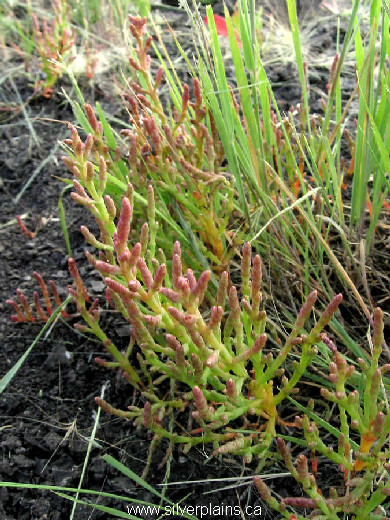
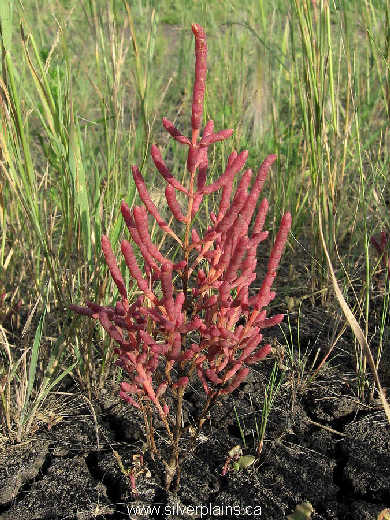
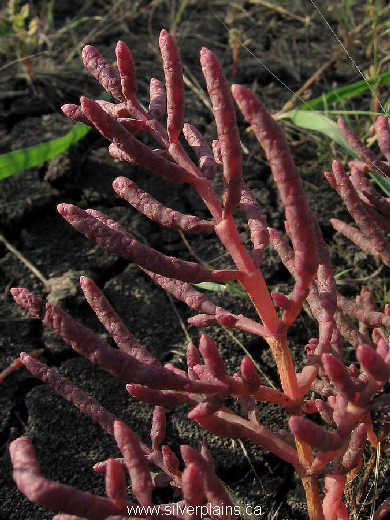
This unusual annual plant tends to grow in large patches, which, when seen from a distance, appear to be brilliant red carpets. Close inspection reveals a branching, low-growing succulent. Roundish stems and branches are in scale-like segments. While most salt-marsh plants secrete salt on their surfaces, this plant has the ability to move excess salt to the stem tips which then simply break off. Also known as greasewood, swampfire, and sea asparagus to name a few.
250,000 seeds/pound; starts from seed.
| T | SSN | H | W | sun | soil | H2O | fire | N2 | pH | summer | fall | flower (seed) |
|---|---|---|---|---|---|---|---|---|---|---|---|---|
| A | W | 0.3 | 0.2 | S | M-C | DM | X | - | 6.5-9.4 | green | red | green |
habitat
Alkaline flats, shores and ditches. Prefers gritty soil.
uses
Salty to taste; may be used in salads, eaten raw or cooked. Also, a source of vegetable oil.
Comments (3)