Carex utriculata
characteristics
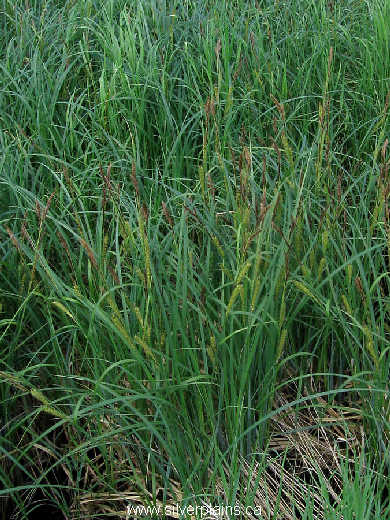
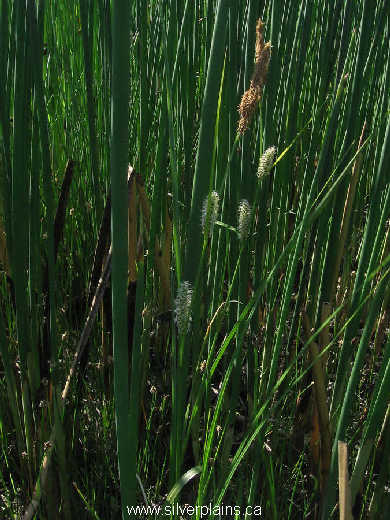
Stems are stout and erect with flat powdery looking green leaves 5 - 10 mm wide. The leaves of this plant look similar to prairie cordgrass, however, the stems are distinctly triangular and the leaf edges are smooth. The same with beaked sedge, Carex rostrata which has rounder stems.
A frost-tolerant, prolific seeder with a lifespan of 2-6 years.
Often found with fewflowered spikesedge, water horsetail, swamp cinquefoil, sphagnum moss.
Starts from seed, bare root, sprig, cutting.
| T | SSN | H | W | sun | soil | H2O | fire | N2 | pH | summer | fall | flower (seed) |
|---|---|---|---|---|---|---|---|---|---|---|---|---|
| P | CW | 1.1 | S | S/PS | F-M | W | ••• | - | 4.5-7.0 | green | - | brown |
habitat
Wet meadows, marshes, edges of lakes, ponds, streams, and other riparian areas.
uses
Birds attracted include red-winged blackbird, mallard, common yellowthroat and song sparrow. Beaked sedge is more important for feeding than for nesting as it grows in dense, almost impenetrable, stands.
Comments